[ NEURALARC_PRODUCT_—_DOZERO ]
Agentic Company-Builder Platform
What it is
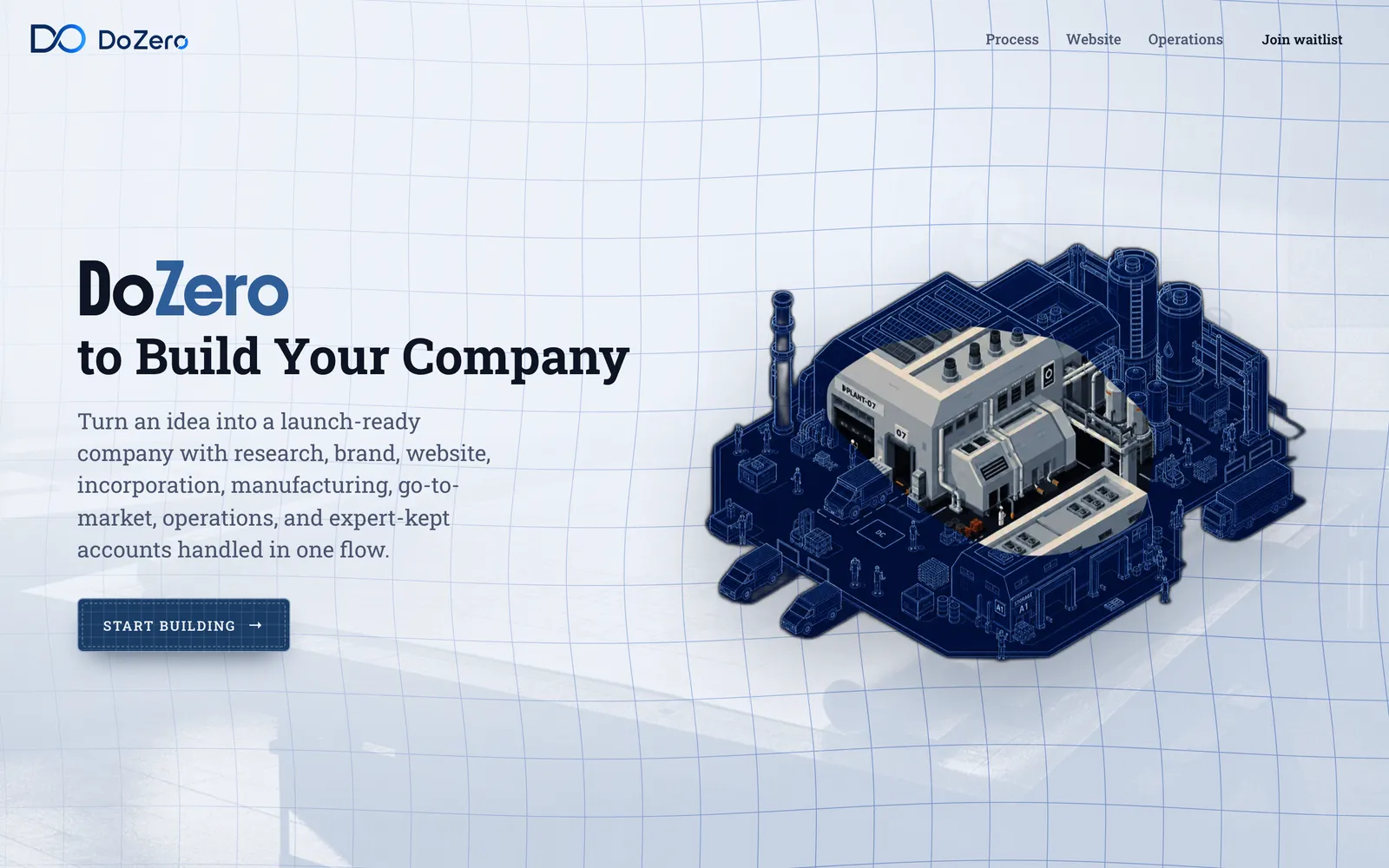
A platform where an operator describes a business function and an agent team stands it up.
[ THE_PROBLEM ]
Why this existed
Agent demos fall over on the second step. The hard part is not calling a model — it is context that fits the window, tools that reach real systems, sandboxes that can run generated code safely, and a human approval gate before anything ships.
[ WHAT_WE_BUILT ]
What we built
A multi-agent runtime with a custom context engine — budgeted history, memory, prompt assembly — sitting behind a chat surface segmented by role (CEO, HR, PM, research, design, social, video). Agents reach the outside world three ways: a Composio integration layer for third-party SaaS, MCP servers, and a workflow engine that maps onto n8n's node catalogue. Code-producing work runs in sandboxed environments (e2b, plus per-user Docker containers driven by a FastAPI orchestrator) with live preview. Add approvals queues, an artifact store, scheduled crons, group knowledge bases with @-mentions, and an admin console over containers, users and runs.
- Multi-agent runtime with a budgeted context engine over history, memory and prompts
- Role-segmented surfaces for CEO, HR, PM, research, design, social and video functions
- Third-party SaaS integration through a tool router, plus MCP server support
- Workflow engine mapped onto an existing automation node catalogue
- Sandboxed code execution with per-user containers and live preview
- Approval queues so nothing reaches the outside world unreviewed
- Scheduled jobs, artifact storage and group knowledge bases with @-mentions
- Admin console over containers, users, projects and agent runs
[ HOW_IT_IS_USED ]
How a company uses it
A founder or ops lead delegates a recurring business function — market research, content production, a build task — to a configured agent rather than a contractor, with an approval gate before anything ships. The same runtime is how an internal team gives every department an agent without wiring seven different integrations by hand.
Built with
[ COMMON_QUESTIONS ]
Questions clients ask
Is this an agent framework or a product?
A product, built on a runtime we control. The distinction matters because frameworks leave you to solve context budgeting, sandboxing, approvals and observability yourself — which is most of the work. What is reusable here is the runtime and the integration layer; the department-shaped surfaces on top are configuration.
How do you stop an agent doing something expensive or wrong?
Approval queues on anything outward-facing, sandboxed execution for anything that runs code, and a run log with per-step events so a bad outcome can be traced rather than guessed at. The design assumption is that agents will sometimes be wrong, so the question is whether the mistake is contained and visible.
Can it connect to the tools we already use?
Yes — through a tool router covering common SaaS applications, through MCP servers for anything with a modern integration, and through the workflow engine for logic your operations team already maintains. That last route matters: it keeps business logic where non-developers can change it.
[ RELATED_WORK ]
Similar builds
Advisory & consulting
Document-Grounded Business Advisor
An AI advisor that will only tell you things it can point to in your own documents.
Read case studyNeuralArc product — OpenDesign
AI Design Canvas
Prompt a screen, slide deck or wireframe; then edit it directly instead of re-prompting.
Read case studyNeuralArc product — AccessAllGPT
Multi-Model AI Workspace
One subscription and one interface across OpenAI, Anthropic, Google, Groq and xAI.
Read case studyIs this close to your problem?
Most engagements start with a version of something on this page. Tell us what is different about yours and we will tell you what it changes.
Start a conversation