[ NEURALARC_PRODUCT_—_OPENDESIGN ]
AI Design Canvas
What it is
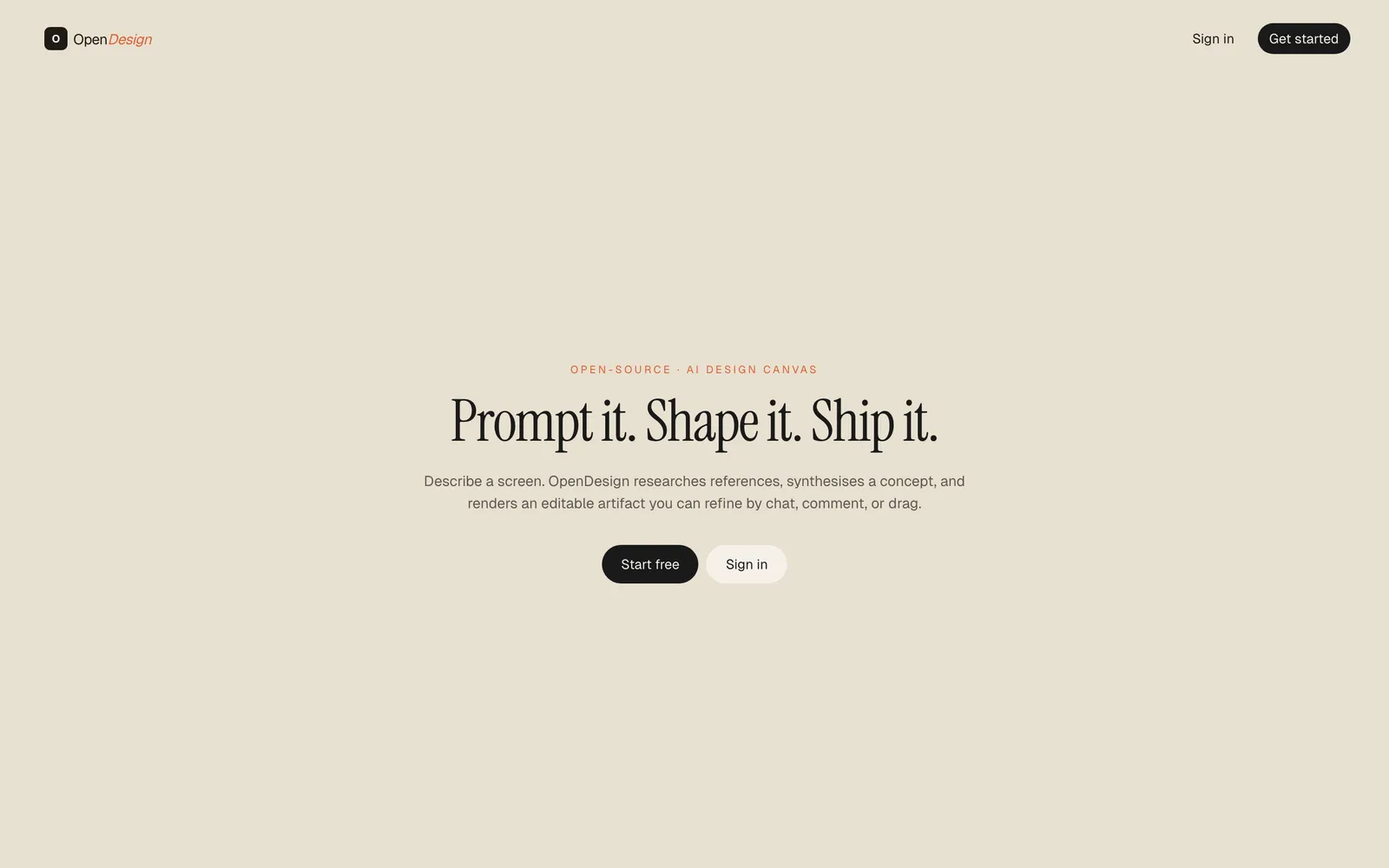
Prompt a screen, slide deck or wireframe; then edit it directly instead of re-prompting.
[ THE_PROBLEM ]
Why this existed
Prompt-to-design tools produce something close but not right, and then the only lever is re-prompting and hoping. What is missing is the ability to grab the output and adjust it directly.
[ WHAT_WE_BUILT ]
What we built
A brief becomes an editable HTML artifact. If the brief is vague the agent asks three to six scoped questions first rather than guessing. From there: slide-deck mode emitting 5–8 cohesive slides, a wireframe/high-fidelity fidelity switch, one-click generation of three alternative directions to compare, an A/B variant view, and a visual editor that lets you edit text inline and drag/resize elements with a live style inspector. Comments pin to a specific element and the agent refines that spot. Brand tokens are reusable across projects and can be ingested by pointing at a URL or dropping an image. Users bring their own OpenRouter key, stored AES-256-GCM encrypted. Exports to HTML, PDF or Next.js.
- Turns a brief into a full editable HTML artifact rather than a flat image
- Asks three to six scoped questions first when the brief is too vague to act on
- Slide-deck mode emitting five to eight cohesive slides with keyboard navigation
- Wireframe and high-fidelity modes via a fidelity flag
- Generates three alternative directions in one click for comparison
- Inline text editing plus drag and resize with a computed-style inspector
- Comments pinned to a specific element, with agent refinement of that spot
- Reusable brand token sets, ingestible from a URL or an uploaded image
- Bring-your-own model key, stored AES-256-GCM encrypted
- Export to HTML, PDF or Next.js
[ HOW_IT_IS_USED ]
How a company uses it
A marketing or product team produces on-brand concepts, decks and wireframes without booking design time for the first three drafts — and hands the designer an artifact to refine rather than a blank page.
Built with
[ COMMON_QUESTIONS ]
Questions clients ask
Does this replace a designer?
No, and pitching it that way sets the wrong expectation. It replaces the first three drafts — the exploratory rounds where a designer is mostly discovering what the stakeholder actually meant. Handing a designer an editable artifact and a pinned comment thread is a better starting point than a blank canvas and a paragraph of brief.
Which AI model does it use?
Whichever you choose. It routes through a provider-agnostic gateway with presets, and accepts a custom model tag. Users supply their own API key, stored encrypted. That means model choice stays an operational decision you can revisit rather than something welded into the build.
Can we put our own brand into it?
Yes. Design systems are first-class — palette, typography and mood tokens are stored and linked per project. You can also point the brand ingest at an existing website URL or drop in a reference image and it will extract tokens from that into a project-scoped brand.
[ RELATED_WORK ]
Similar builds
Advisory & consulting
Document-Grounded Business Advisor
An AI advisor that will only tell you things it can point to in your own documents.
Read case studyNeuralArc product — DoZero
Agentic Company-Builder Platform
A platform where an operator describes a business function and an agent team stands it up.
Read case studyNeuralArc product — AccessAllGPT
Multi-Model AI Workspace
One subscription and one interface across OpenAI, Anthropic, Google, Groq and xAI.
Read case studyIs this close to your problem?
Most engagements start with a version of something on this page. Tell us what is different about yours and we will tell you what it changes.
Start a conversation