[ MEDICAL_EDUCATION ]
Clinical Posting Companion
What it is
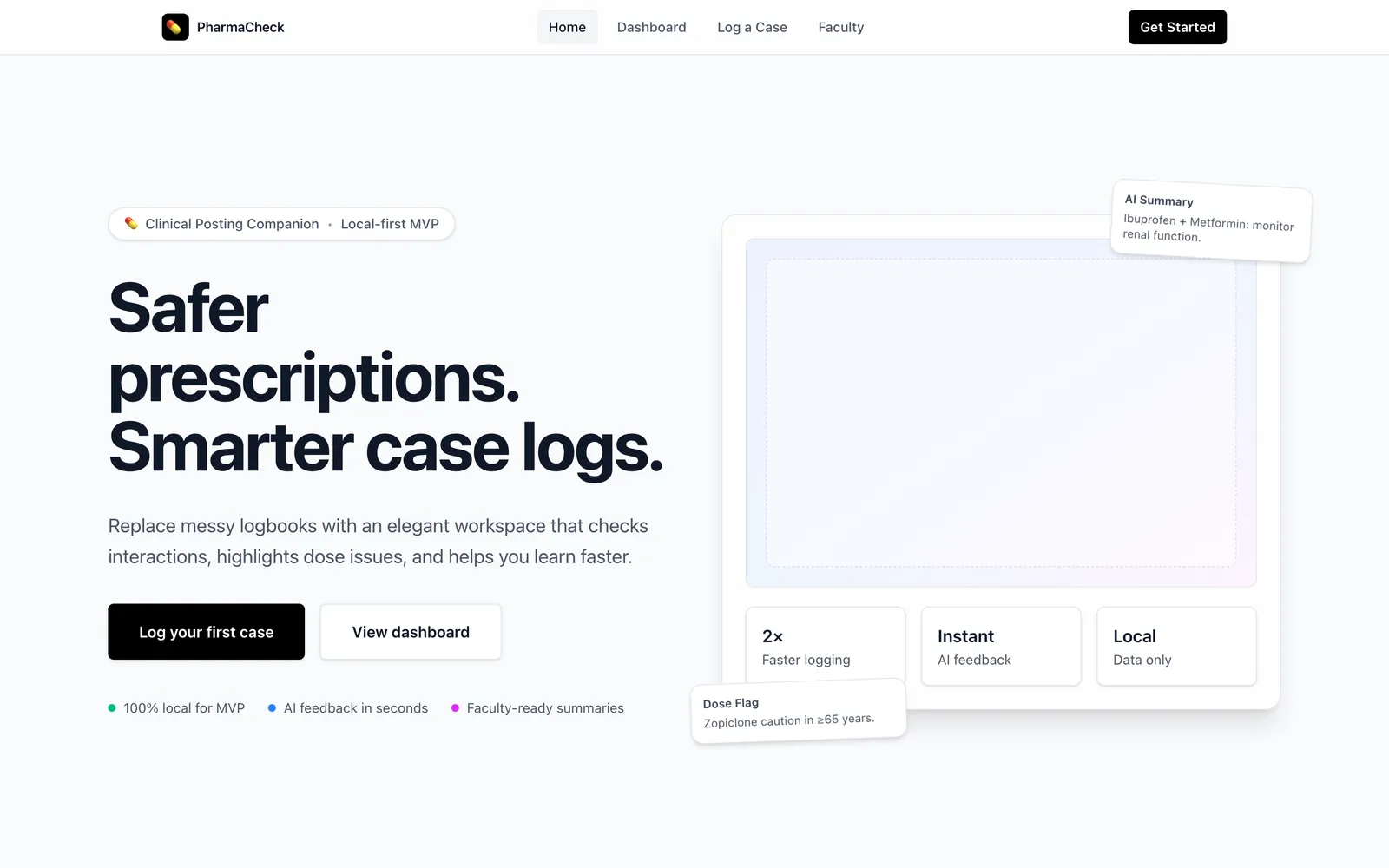
Students log anonymised patient cases; faculty review them in a queue.
[ THE_PROBLEM ]
Why this existed
Clinical logbooks are still paper, and every proposal to digitise them stalls on the same question: where does patient data go?
[ WHAT_WE_BUILT ]
What we built
A guided multi-step case wizard, an AI safety check surfacing interaction and dosage concerns, a faculty review queue with approve or request-revision plus free-text feedback, and a status dashboard. Deliberately local-first — no accounts, no server database — because patient data leaving the device was not acceptable for the pilot.
- Guided multi-step case logging wizard
- AI safety check surfacing interaction and dosage concerns
- Faculty review queue with approve or request-revision plus free-text feedback
- Status dashboard of cases by state
- Local-first storage with no accounts and no server database
[ HOW_IT_IS_USED ]
How a company uses it
A teaching hospital digitises clinical logbooks without a data protection review blocking the pilot. The privacy constraint shaped the architecture rather than delaying the project.
Built with
[ COMMON_QUESTIONS ]
Questions clients ask
Why build it local-first?
Because the alternative was not building it. Patient data leaving the device would have triggered a data protection review that outlasted the pilot. Storing everything locally meant the teaching value could be tested immediately, with the architecture reconsidered if it proved worth scaling.
What are the limits of local-first?
No cross-device access, no central analytics, and data lost if the browser is cleared. Those are real costs, accepted deliberately because the alternative was a project that never shipped. Scaling it would mean a proper de-identification and consent design.
How reliable is the AI safety check?
It is a teaching prompt, not a clinical decision tool, and should never be presented as one. Its role is to make a student consider interactions they had not — with faculty review as the actual check.
[ RELATED_WORK ]
Similar builds
Recruitment technology
AI Video Interview Platform
Asynchronous video interviews at scale, with AI assessment and its own billing.
Read case studyOnline education
Anti-Piracy Course Platform
A course platform designed around content not leaking.
Read case studyLearning & development
Learning Roadmap Generator
Describe a skill you want and get a structured, visual roadmap to it.
Read case studyIs this close to your problem?
Most engagements start with a version of something on this page. Tell us what is different about yours and we will tell you what it changes.
Start a conversation